
Situation
Client supplied a very low-quality CGI needing enhancement and animation, without any 3D data. Flat lighting, unusable people, and weak textures made traditional post-production insufficient.
Task
I was responsible for assessing feasibility, managing risk, and delivering a market-ready still and believable animation while ensuring visual credibility and client confidence.
Action
I tested the approach with mock-ups before committing, then used a controlled hybrid of AI-assisted enhancement and traditional post-production, carefully managing structure, realism, and motion.
Result
The work was approved with minimal revisions, used across print and social media, saved time and cost, and led to three additional commissions. The technique became a new internal service.

Before

After

Before

After
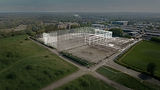
Situation
Aerial drone photography was not possible due to access or conditions, but the project still required a credible aerial context for visualisation and film use.
Task
I was responsible for finding an alternative that preserved geographic credibility, visual quality, and delivery timelines without relying on on-site drone capture.
Action
I proposed using Google Earth 3D as a locked backplate, tested camera and geometry stability, and applied a controlled AI-assisted and traditional enhancement to improve lighting, clarity, and realism.
Result
The visual was approved and used in both stills and film. The approach became a repeatable service offering, giving clients a faster, cost-effective alternative to drone photography.


Before

After
Situation
A daylight aerial render lacked clarity around site connections. Geometry and camera alignment had to remain fixed while improving legibility of roads, transport links, and surrounding context.
Task
I was responsible for enhancing visual clarity and communication value without changing camera position or site geometry, while meeting client expectations and deadlines.
Action
I tested the approach with mock-ups before committing, then used a controlled hybrid of AI-assisted enhancement and traditional post-production to shift the scene to evening conditions, enhancing contrast and visibility while preserving accuracy.
Result
The image clearly communicated site context, was approved quickly, extended into motion, exceeded client expectations, and strengthened the relationship, leading to further work.
Used a camera- and geometry-locked aerial base to transform lighting conditions, improving clarity of site connectivity and spatial understanding without altering geographic accuracy.
Situation
Rapid changes in creative technology, especially AI, created skill gaps, uncertainty, and inconsistent adoption across the team during live project delivery.
Task
I took ownership of enabling the team to understand, evaluate, and use new tools responsibly while maintaining quality, confidence, and alignment.
Action
I established regular Creative Technology sessions, sharing learnings, discussing real project challenges, reviewing tools, and facilitating collaborative problem-solving in an engaging, structured format.
Result
The sessions improved team confidence, consistency, and AI literacy, strengthened collaboration, and created a shared understanding of responsible technology use, supported by documented internal and external testimonials.

Situation
A low-budget branding context required a consistent, clean visual language without commissioning custom illustrations, while maintaining recognisable structure and repeatability across assets.
Task
I was responsible for defining a scalable visual style and testing whether AI could reliably translate photography into a consistent illustration language.
Action
I explored and validated multiple styles, selected a suitable visual language, and tested controlled style transfer to ensure consistency, accuracy, and repeatability across varied inputs.
Result
The outcome was a clear, reusable visual system that could be applied autonomously, enabling fast, consistent asset creation without additional illustration costs.

Before

After
A series of short-form AI-assisted videos created for clients, social media, and internal campaigns to test emerging formats, increase visibility, and validate new creative products.
Situation
The studio needed short, high-impact video content for social media, self-promotion, and client teasers, at a time when AI-driven video was still emerging and unproven.
Task
I was responsible for exploring new video formats that could generate attention quickly, remain production-feasible, and test whether experimental AI-led content could become a viable offering.
Action
I produced a series of short videos using hybrid workflows combining Adobe Creative Cloud and generative AI for imagery, motion, and sound, pushing creative boundaries while maintaining delivery speed.
Result
The videos increased LinkedIn visibility, generated strong internal and external interest, and led to client demand for similar “virtual impact ad” products, validating the format as a repeatable offering.


